
The history of Southport
From the boulevard to the present day
There was a time when people saved up all year for a week in Southport.
They came off the trains in their thousands. They walked Lord Street under the glass canopies, strolled the pier, took the sea air along the promenade, and went home talking about it for months. Southport was a town people chose to visit.
That did not end with the Victorians. The town has had good years and bad since then: pier closures and reopenings, council reorganisation, and tragedy as well as pride. This page runs from the 1820s to today.
A garden built beside the sea
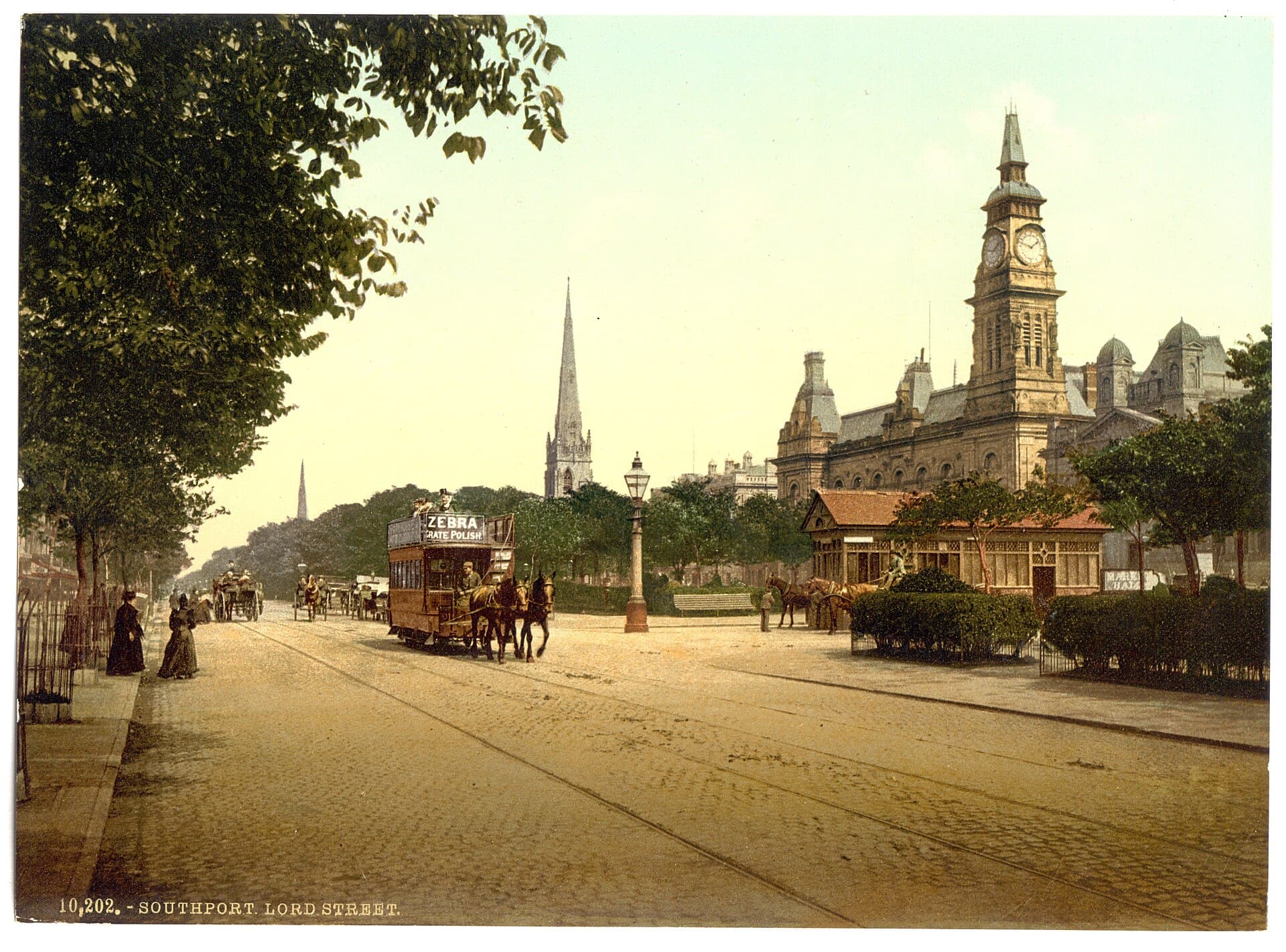
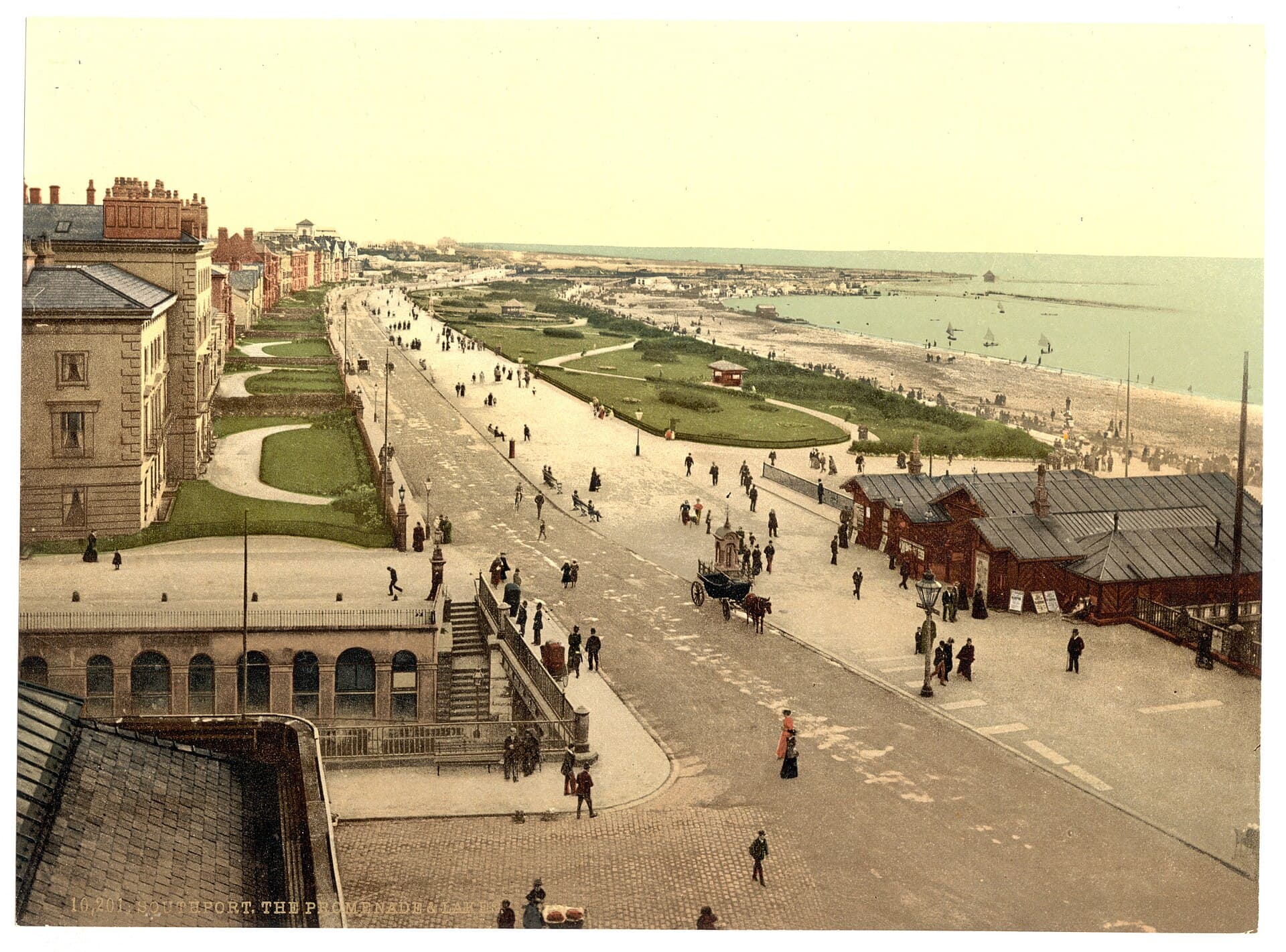
Lord Street was laid out in the 1820s. Local legend has it that Napoleon III, who may have stayed here in exile, took the idea back to Paris. The railway came in 1848. The pier opened in 1860, the Botanic Gardens in 1874, and the Flower Show has run here since 1924.
The town's churches grew with it. Christ Church on Lord Street dates from 1821. Holy Trinity followed in 1837. St Marie's, by the architect A.W.N. Pugin, opened in 1841. St Cuthbert's in Churchtown and the Methodist chapels served the suburbs as Southport spread inland.
In 1905 Southport became a county borough and ran its own affairs from the Town Hall for nearly seventy years. King George V and Queen Mary visited in 1913.
“Lord Street, stretching from the Hesketh Park to Birkdale, is among the streets of the world.”
“Lord Street — the miniature or wee prototype of the Champs Elysees.”
After the war to today
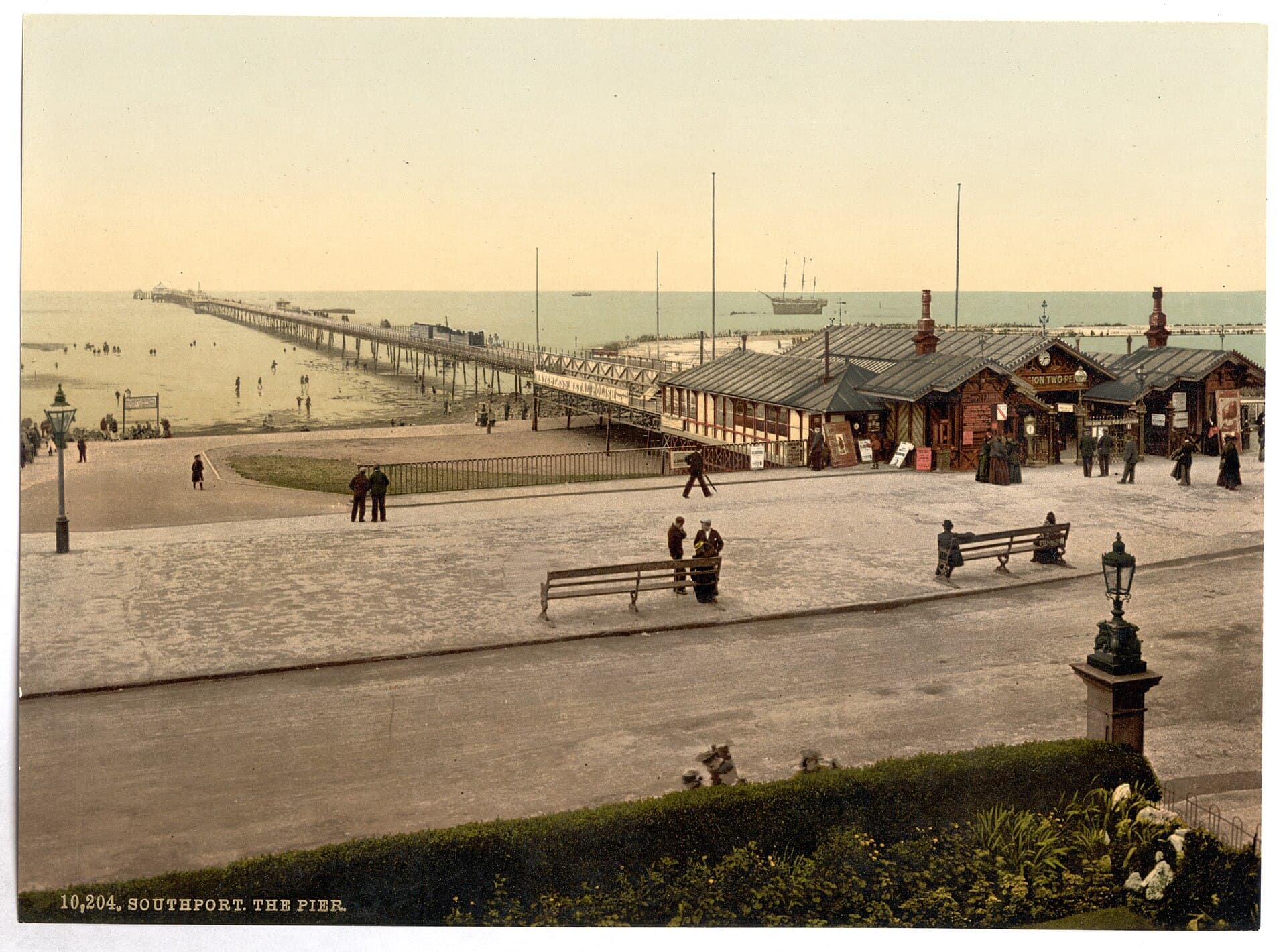
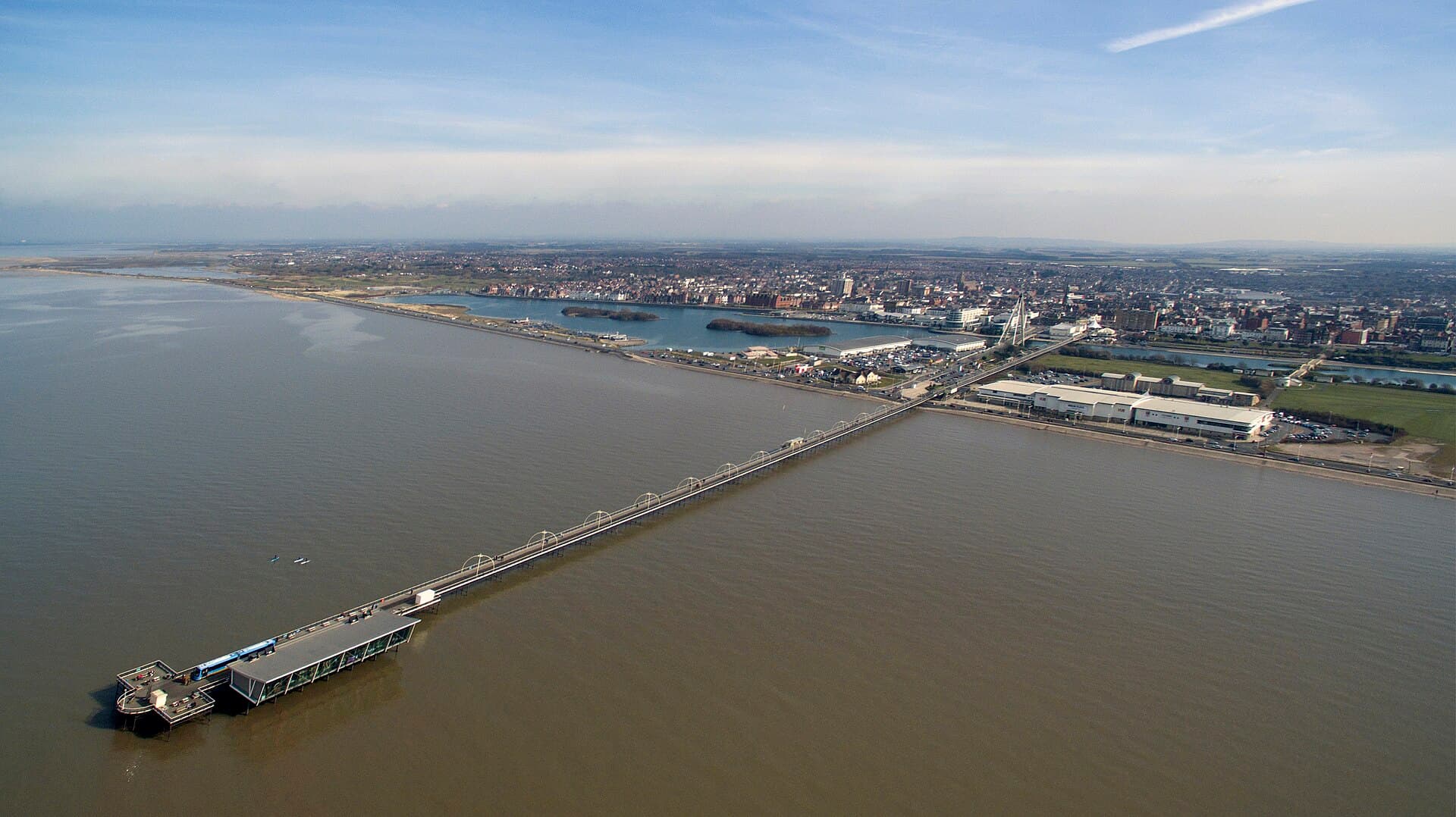
Steamer services from the pier ended in the 1920s. By the late twentieth century the structure was in serious decline. Storm damage in 1989 led Sefton Council to propose demolition in 1990, defeated by a single vote. The pier closed for safety in 1998. Work began in 2000 and it reopened in May 2002. It closed again in December 2022 when engineers found the decking unsafe.
Pleasureland beside the Marine Lake entertained generations of families. It closed in September 2006 and the Cyclone rollercoaster was demolished, but the park reopened in 2007 and still trades as Adventure Coast Southport.
In 1974 Southport joined Sefton within Merseyside and the county borough ended. Sefton was Conservative-controlled from 1974 to 1986, had no overall control until 2012, and has had a Labour majority since then. The Flower Show carried on through all of it, but empty shops and a closed pier tell their own story.
In July 2024, Southport lost three young girls: Bebe King, Elsie Dot Stancombe and Alice Dasilva Aguiar. They had gone to a dance class on Hart Street. Vigils were held across the town. We remember them here.
From the 1820s to today
Landmarks, institutions and events that have shaped Southport over the last two centuries.
- 1820s
Lord Street is laid out as one of the first grand boulevards in the world.
- 1821
Christ Church opens on Lord Street, the first Anglican church in the growing resort.
- 1837
Holy Trinity Church is consecrated on Manchester Road, serving the expanding town centre.
- 1841
St Marie's Church opens on Eastbank Street, designed by A.W.N. Pugin, one of the finest Catholic churches in the North West.
- 1848
The railway arrives, bringing the merchant families of Liverpool and a new era of seaside holidays.
- 1860
Southport Pier opens, the first iron pleasure pier in the country and still the second longest in Britain.
- 1874
The Botanic Gardens open. The town earns its reputation as a garden by the sea.
- 1905
Southport becomes a county borough, running its own schools and services from the Town Hall.
- 1924
The Southport Flower Show begins. It still draws visitors from across the country every August.
- 1974
Local government is reorganised. Southport becomes part of Sefton within Merseyside and the county borough is abolished.
- 1998
The pier closes for safety after a structural survey finds it in poor condition, following years of decline and storm damage in 1989.
- 2002
The pier reopens in May after a £7.2 million restoration. Work had begun in 2000, with funding from the Heritage Lottery Fund and other sources.
- 2006-07
Pleasureland closes suddenly and the historic Cyclone rollercoaster is demolished. The amusement park reopens under new ownership the following year.
- 2012
Labour wins an overall majority on Sefton Council for the first time. It has held that majority since.
- 2022
The pier is closed again after engineers find the structure unsafe, following extreme weather and freeze damage.
- July 2024
Bebe King, Elsie Dot Stancombe and Alice Dasilva Aguiar lose their lives in an attack at a children's dance class on Hart Street. Southport grieves for them.
- 2026
Government funding of £20 million is approved for a full restoration of the pier, with works expected to take around 14 months.
Not finished yet
The pier has £20 million earmarked for restoration. The Flower Show still fills the town each summer. Lord Street is still one of the best boulevards in the country on paper. The job now is to match the upkeep to the history.
That is what Restore Southport is for.